

The Future Beyond Smartphones is quickly becoming a reality as major tech companies develop smarter ways for people to interact with technology. Instead of relying on a single device all day, the upcoming post-smartphone era will introduce connected systems that work naturally around you. Experts believe AI assistants, wearable devices, and intelligent environments will reduce screen dependence and improve everyday experiences.
This shift aims to solve problems like digital fatigue and constant distractions. As new innovations emerge, the future of mobile technology will focus more on convenience, personalization, and seamless interactions. The goal is not simply replacing phones but creating a smarter and healthier smartphone-free future that allows technology to support your life without constantly demanding your attention.
| Current Smartphone Era | Future Beyond Smartphones Era |
| Handheld devices | Wearable technology |
| Constant screen use | Invisible interactions |
| Manual searching | Predictive AI |
| Separate apps | Unified ecosystems |
| Phone dependency | Ambient experiences |
What Is the Post-Smartphone Era and Why Does It Matter?
Imagine technology becoming almost invisible. That is the idea behind the post-smartphone era. Instead of carrying one device everywhere, you may rely on several connected tools working together. Experts call this next generation computing because information will appear when you need it. The future beyond smartphones focuses on reducing smartphone dependency and creating a smoother digital experience.
This transition matters because people are exhausted by endless notifications. Many Americans struggle with digital fatigue, screen addiction, and poor digital wellbeing. Companies now want to build systems that operate beyond mobile devices. This could improve productivity and reduce mental stress. The future of mobile technology may no longer revolve around phones at all.
Understanding the Shift From Screens to Invisible Technology
Today’s phones require constant attention. Tomorrow’s devices may quietly support you without interruptions. Experts describe this change as screenless computing. Instead of opening applications, ambient AI will understand your surroundings and provide useful information automatically. These systems may become the next computing platform that replaces traditional habits.
For example, your glasses may display directions while walking through New York City. Your earbud may translate another language instantly. This creates life after smartphones where technology works quietly in the background. The experience becomes more human and less distracting.
Why Tech Giants Are Moving Beyond Smartphones
The smartphone market is slowing down. People keep devices longer than before. This situation creates smartphone market saturation. Companies know they cannot depend on yearly upgrades forever. Therefore, they are searching for new opportunities that could become the next trillion-dollar market.
At the same time, consumer behavior is changing. Many Americans want a healthier relationship with technology. They want fewer interruptions and more convenience. This demand encourages companies to build AI-powered devices, intelligent assistants, and smarter digital systems that improve daily routines without increasing stress.
Why Consumers Want More Natural Digital Experiences
People no longer want technology controlling every moment. They prefer hands-free technology that saves time. This is where conversational AI and voice-first interactions become important. Instead of typing, users can simply speak or make gestures to complete tasks.
This movement also supports screen time reduction. Many families want to disconnect from technology without losing convenience. Companies believe invisible systems will solve this problem. However, technology adoption depends on whether consumers trust these new devices.
The Key Technologies That Could Replace Smartphones
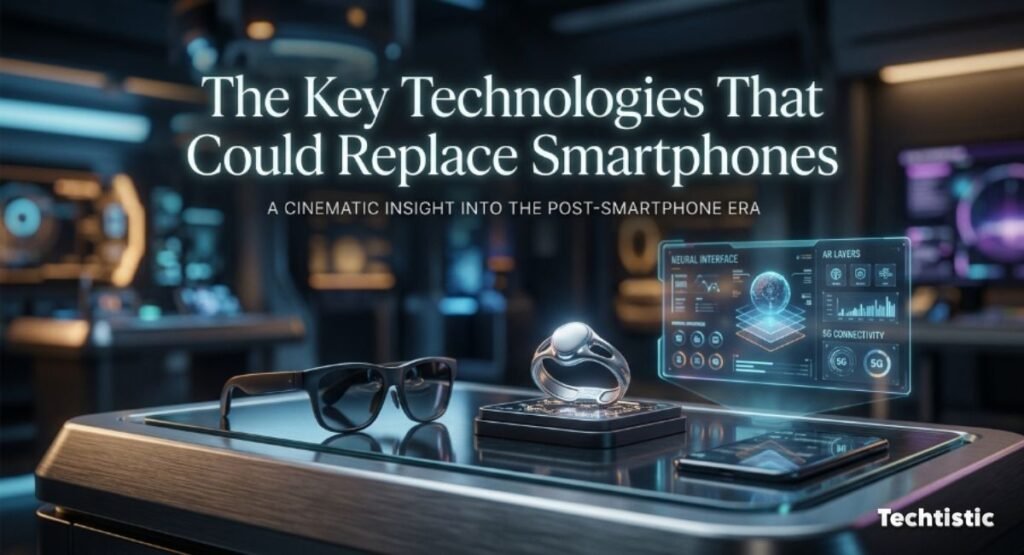
Several inventions may become the future leaders of smartphone replacement. The first is wearable AI. The second is ambient computing. The third is brain-computer interface technology. Together, these innovations could reshape communication forever. The future beyond smartphones depends on multiple devices working together instead of one single phone.
Another important factor is simplicity. New products must blend naturally into everyday life. Nobody wants to wear uncomfortable equipment. Successful devices will be small, lightweight, and useful. That is why engineers focus heavily on emerging technologies that feel invisible.
| Technology | Primary Purpose | Estimated Mainstream Adoption |
| AR glasses | Visual information overlays | 2027-2030 |
| Wearable AI | Personal assistance | 2026-2029 |
| Ambient computing | Background automation | 2026-2032 |
| Brain interfaces | Thought control | 2035+ |
| Smart rings | Health tracking | 2026-2028 |
Five Technologies Driving Smartphone Replacement
The first category includes wearable devices. These products include smart rings, AI earbuds, and connected wearables. They collect information and help users without requiring constant screen use. These tools support a smartphone-free future.
The second category includes body-integrated technology. Scientists are developing thought-controlled devices, implantable technology, and advanced human-machine interaction systems. Although this technology remains experimental, it could shape the end of smartphones over the next decade.
How AI Assistants Will Become the New Digital Interface
Imagine waking up while your assistant already knows your schedule. This is the future of AI assistants. These systems will evolve from simple chatbots into intelligent companions. Instead of waiting for commands, proactive AI will anticipate your needs and offer solutions automatically.
These assistants may become your personal organizer, translator, and travel guide. They will operate inside a larger digital ecosystem that connects your home, office, and vehicle. This seamless experience supports the future beyond smartphones because information follows you instead of staying trapped inside one device.
Why AI Could Become Your Digital Companion
The biggest advantage is personalization. Artificial intelligence systems learn your habits over time. They can remind you about appointments, suggest healthier routines, and even improve work efficiency. This could increase enterprise productivity in businesses across America.
For example, your assistant may book flights, answer emails, and manage schedules before you ask. These intelligent assistants may save hours every week. However, trust and privacy will remain critical concerns for users.
Augmented Reality (AR) Glasses and Spatial Computing Explained
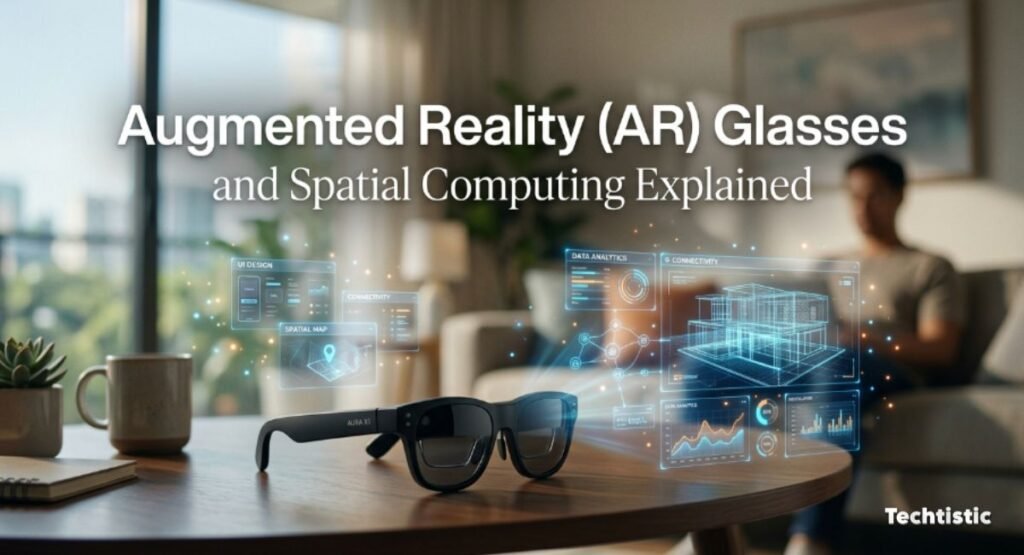
Imagine seeing directions floating in front of your eyes while walking through Chicago. That is how augmented reality may work in daily life. Augmented reality glasses could replace many smartphone functions. Instead of looking down, information appears directly in your field of view.
At the same time, spatial computing merges physical and digital environments together. This technology allows users to interact naturally with digital objects. Many experts believe this innovation will become one of the most important future technology trends during the next decade.
How AR Glasses Could Replace Traditional Screens
Companies are developing AR smart glasses with transparent displays that project notifications and navigation information. Future models may include live translations, weather updates, and productivity tools. This approach creates invisible interfaces that reduce screen dependence.
These devices will also support mixed reality, immersive technology, and extended reality (XR) experiences. Unlike current virtual reality headsets, future products will be lighter and easier to wear throughout the day.
Why Spatial Computing Matters
The rise of spatial computing could transform schools, hospitals, and workplaces. Students may interact with virtual models during lessons. Doctors may visualize patient information instantly. Engineers could build projects inside immersive environments.
Companies are also experimenting with holographic displays that project digital objects into real spaces. These systems may eventually become more useful than smartphones themselves.
“The next generation of technology will not live inside your pocket. It will live around you.”
Since this is a continuation of the same article that you’ll reuse later, I’ll provide Part 2 as a reusable draft.
What Major Tech Giants Are Building for a Smartphone-Free Future
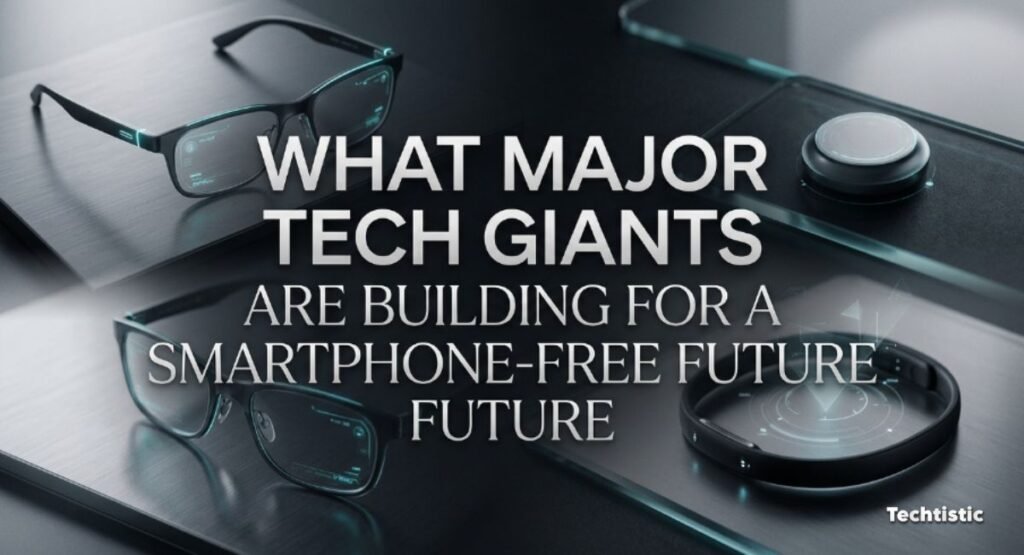
America’s largest technology companies are competing to control the future beyond smartphones. Every company has a different strategy. Apple focuses on connected ecosystems. Meta invests heavily in smart eyewear. Google builds intelligent software. Microsoft improves workplace tools. These companies believe the next wave of tech innovation will transform how humans interact with machines.
This competition is growing quickly because companies want to dominate the next digital revolution. Their massive technology investments could shape the next twenty years. Whoever builds the most useful ecosystem may control the next computing platform and lead the post-smartphone era for decades.
What Major Companies Are Building Today
| Company | Main Project | Long-Term Goal |
| Apple | Apple Vision Pro and future smart glasses | Connected ecosystem |
| Meta | Ray-Ban Meta glasses | Everyday smart eyewear |
| Project Astra and Android XR | AI-powered assistants | |
| Microsoft | AI workplace tools | Productivity ecosystems |
| Samsung | Smart wearables | Connected devices |
Apple continues investing in lightweight devices that work together. Meta focuses on normal-looking glasses. Google combines conversational AI with visual understanding. Samsung develops next-gen wearables that blend naturally into daily routines. Every company hopes to build a complete digital ecosystem.
How Daily Life Could Change in a Post-Smartphone World
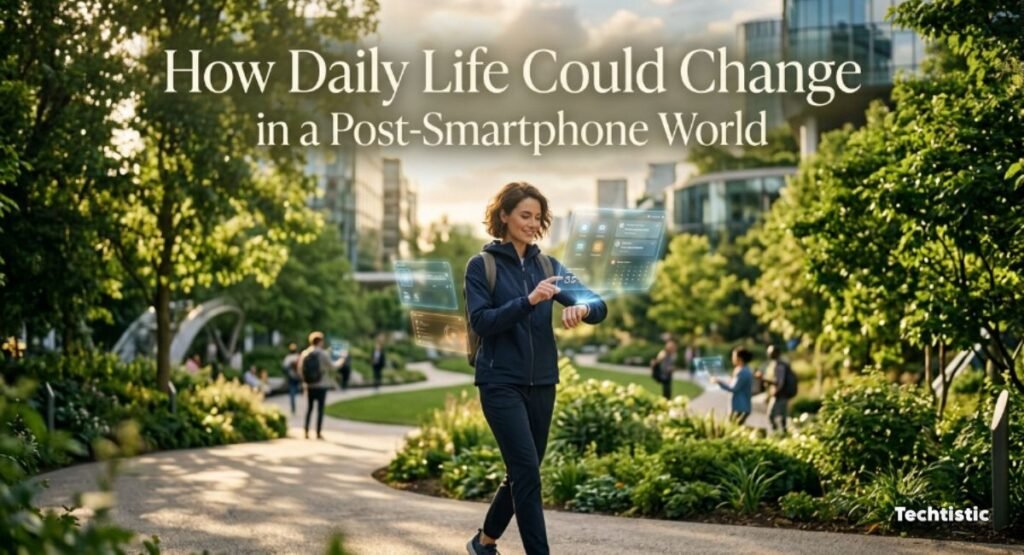
Imagine waking up without touching a phone. Your glasses display your calendar. Your earbuds read important messages. Your home adjusts lighting automatically. This vision represents life after smartphones. Instead of carrying one device, multiple systems will quietly support your day.
The future beyond smartphones could also transform education, shopping, healthcare, and entertainment. Technology may become more helpful and less distracting. However, success depends on balancing convenience with privacy. People want useful tools without feeling constantly monitored.
A Day Inside a Smartphone-Free Future
During breakfast, AI assistants may suggest healthier meals. During your commute, augmented reality could display directions. During work, wearable AI may organize tasks automatically. Every system would operate together.
This shift could improve enterprise productivity and simplify routines. Americans may spend less time opening applications and more time focusing on meaningful activities. That could improve both efficiency and digital wellbeing.
| Daily Activity | Current Smartphone Use | Future Alternative |
| Navigation | Phone maps | AR overlays |
| Translation | Apps | AI earbuds |
| Messaging | Phone keyboard | Voice commands |
| Fitness | Smartphone apps | Smart rings |
| Scheduling | Manual entry | Proactive AI |
Challenges Slowing Down the End of Smartphones
Even exciting technology faces major obstacles. Battery performance remains one of the biggest problems. Current devices cannot operate all day without charging. Engineers are researching solid-state batteries and energy harvesting systems to solve this issue.
Privacy is another challenge. Future devices may collect enormous amounts of information. Consumers worry about who owns this data. Without trust, widespread user adoption could slow down significantly. Technology must respect human boundaries.
Why Human Behavior Could Delay Progress
Many people already suffer from technology burnout and digital fatigue. They do not want more screens invading their lives. They want simpler experiences. This creates consumer resistance toward new products.
Trust will become the deciding factor. Companies must prove these systems improve life instead of increasing stress. Otherwise, consumers may reject the smartphone replacement movement entirely.
“The future will not belong to the most advanced technology. It will belong to the technology people genuinely trust.”
When Will Smartphones Be Replaced? (2027–2040 Timeline)
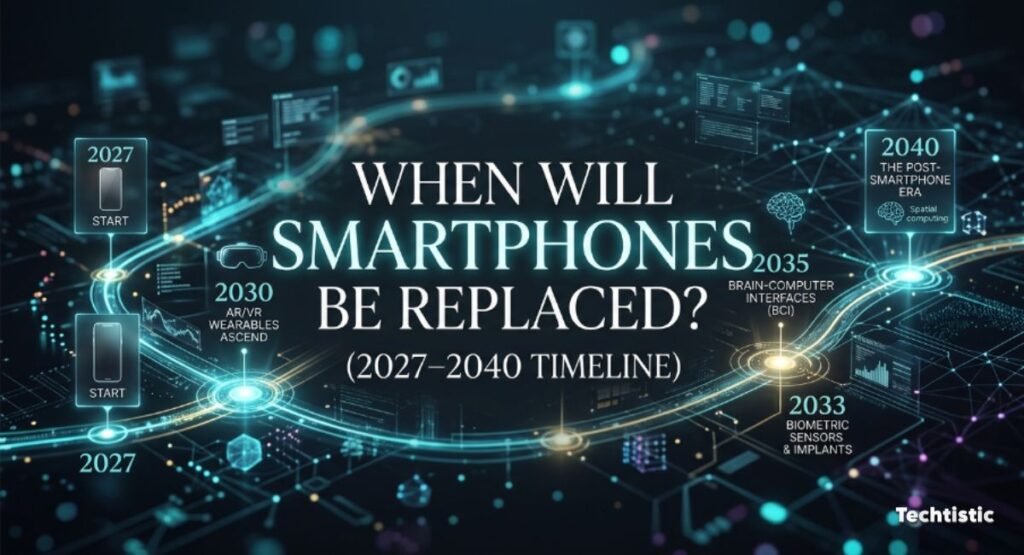
The future beyond smartphones will happen gradually. Experts do not expect phones to disappear overnight. Instead, people will slowly adopt smarter tools. This transition could take more than a decade.
Technology evolves in stages. New products appear first. Prices then decrease. Finally, consumers accept them as normal. This pattern may also apply to the end of smartphones.
Estimated Timeline for the Post-Smartphone Era
| Year | Expected Development |
| 2027 | Affordable AR glasses become common |
| 2028 | AI assistants handle daily tasks |
| 2030 | Widespread wearable adoption |
| 2032 | Reduced smartphone dependence |
| 2035 | Mainstream ambient ecosystems |
| 2040 | Mature smartphone-free environments |
By 2030, many people may rely heavily on ambient computing. By 2035, the future of mobile technology may shift toward invisible experiences. Full replacement could happen closer to 2040. However, no one can guarantee exact dates.
Will Smartphones Disappear Completely or Evolve Into Something New?
Most experts do not expect smartphones to vanish entirely. Instead, they will evolve into companion devices. Phones may become central processors while smaller devices handle daily interactions. This hybrid model feels more realistic.
The future beyond smartphones does not mean eliminating technology. It means creating a better relationship with it. The transition will likely happen step by step rather than overnight.
The Most Realistic Future Scenario
Experts predict humans will use multiple connected devices together. This approach combines AI-powered devices, wearables, and invisible systems into one experience. The result may create a truly smartphone-free future.
Future devices may also support brain-computer interfaces, advanced neural interfaces, and experimental thought-to-action systems. These innovations may seem distant now. However, they are already under development.
| Today | Tomorrow |
| Smartphones | Smart ecosystems |
| Touchscreens | Voice interactions |
| Apps | Ambient systems |
| Notifications | Predictive assistance |
| Devices | Experiences |
Conclusion: The Future Beyond Smartphones Is Already Beginning
The future beyond smartphones is no longer a distant prediction. Major companies are already building the technologies that could define the next decade. The post-smartphone era will depend on trust, simplicity, and useful experiences rather than flashy gadgets.
The most successful products will reduce interruptions and improve human life. Technologies such as brain-computer interfaces, smart glasses, ambient AI, and wearable AI may reshape society. However, people will ultimately decide which innovations survive.
The future may not be about replacing phones completely. Instead, it may be about creating smarter environments that help people live better. The winners will be the companies that make technology feel almost invisible.
FAQs
What is the next big thing after smartphones?
AI-powered wearables, smart glasses, and ambient computing are expected to be the next major technologies after smartphones.
What will Mark Zuckerberg replace smartphones with?
Mark Zuckerberg believes AR smart glasses will eventually replace many everyday smartphone functions.
Will smartphones ever go away?
Smartphones will likely evolve into companion devices rather than disappear completely.
What smartphone do tech billionaires use?
Most tech billionaires primarily use Apple iPhones or other premium flagship smartphones.
What smartphone does Elon Musk use?
Elon Musk has said he mainly uses an iPhone for his daily activities.

Welcome to techtistic I’m Adnan Jabbar, an AI-Powered SEO, Content Writer with 4 Years of Experience. I Help Website to Rank higher, grow Traffic and looking amazing. My goal is to make SEO and Web design simple and effective for everyone. Lets Achieve more Together!